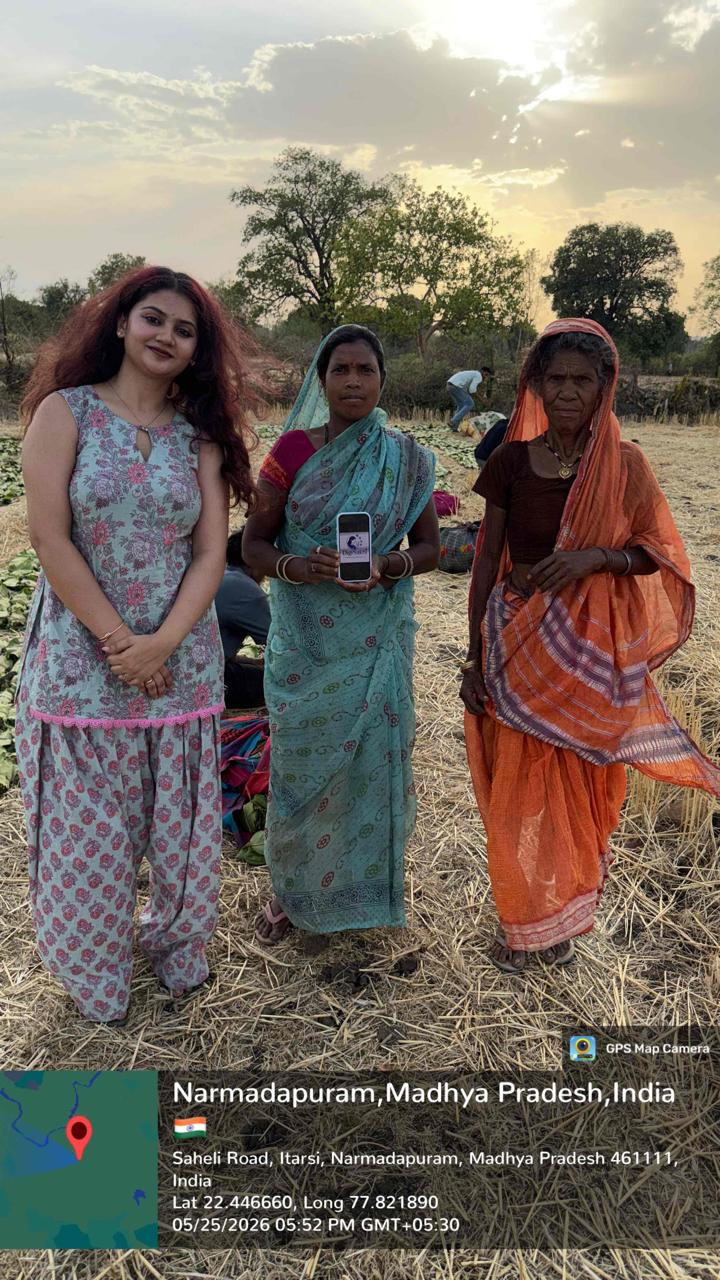
• Financial literacy in India is increasingly recognised as a critical driver of inclusive growth. From government initiatives to digital banking expansion, the country has made visible progress toward financial inclusion. Yet, despite these efforts, financial literacy remains uneven—particularly for women and marginalised communities. At DigiSakhi, our mission is to bridge this gap by empowering women with financial and digital awareness so they can make informed, confident decisions. Understanding the challenges in promoting financial literacy is essential to turning access into true empowerment.

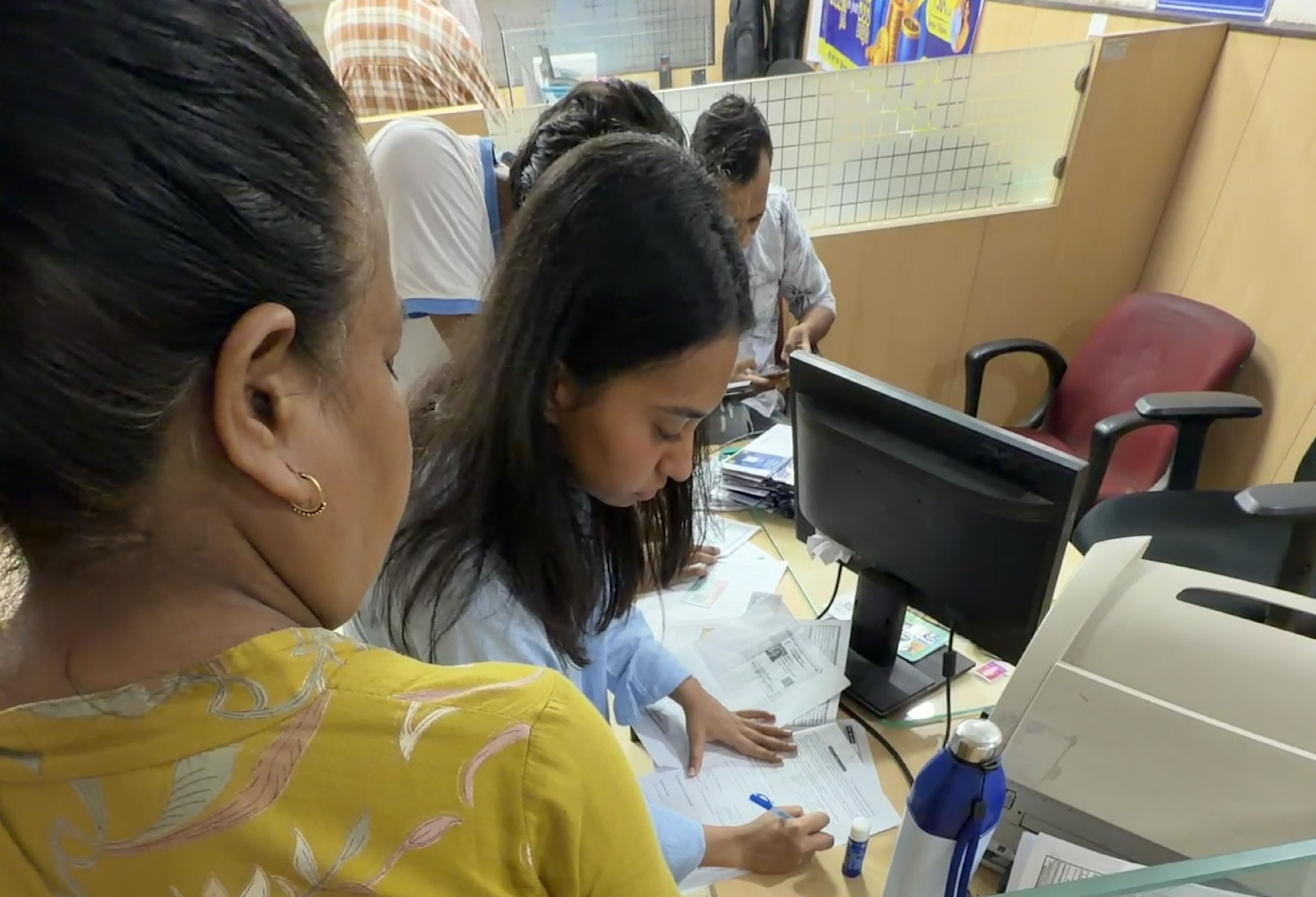
    One of the most fundamental challenges is low financial awareness. Many women across India actively manage household expenses, savings, and daily budgeting, yet remain unfamiliar with formal financial concepts such as interest rates, insurance coverage, pensions, or credit scores. While schemes like Pradhan Mantri Jan Dhan Yojana (PMJDY) have successfully brought millions into the banking system, account ownership alone does not guarantee financial understanding. Without adequate financial education, many accounts remain underused, and women continue to rely on informal methods of saving and borrowing.

    The lack of structured financial education is especially visible at the community level. Financial literacy is rarely taught in schools or discussed openly at home. As a result, people often learn through experience—sometimes costly experience. Women, in particular, are excluded from financial conversations, even when they are the primary managers of household finances. DigiSakhi’s work begins at this very gap, focusing on awareness that is practical, relevant, and rooted in everyday life.

    Language barriers further limit financial inclusion in India. While financial services have expanded rapidly, much of the information surrounding them remains inaccessible. Bank forms, insurance documents, mobile banking apps, and government portals are often presented in English or technical Hindi, creating confusion for first-time users. Schemes such as Pradhan Mantri Suraksha Bima Yojana or Atal Pension Yojana are powerful tools for social security, yet many potential beneficiaries do not fully understand their benefits or enrollment processes. DigiSakhi’s mission prioritises communication in simple, local language so that financial literacy becomes understandable rather than intimidating.

    Mistrust in financial institutions is another major barrier to promoting financial literacy in India. This mistrust is shaped by past experiences of hidden charges, mis-selling of financial products, and financial fraud. Reports of digital scams, fake loan apps, and misleading investment schemes have further increased fear, especially among women who are cautious about risking household savings. Even government-backed initiatives sometimes suffer from low uptake due to lack of clarity and trust. DigiSakhi addresses this challenge by focusing on transparency, awareness of consumer rights, and informed decision-making rather than blind adoption of financial products.

    The rise of digital finance has transformed India’s financial landscape, but it has also introduced new challenges. Digital platforms such as UPI, mobile wallets, and online banking have made transactions easier, yet digital financial literacy has not kept pace. Access to smartphones and stable internet remains unequal, particularly for women in rural and semi-urban areas. Fear of making mistakes, losing money, or falling victim to cyber fraud discourages many from using digital tools. DigiSakhi integrates digital literacy with financial education, ensuring women not only access digital services but use them safely and confidently.

    Social and cultural norms continue to shape financial behaviour in subtle but powerful ways. In many Indian households, financial decisions are traditionally handled by male members, while women’s roles are limited to execution rather than decision-making. Talking about money openly is often discouraged, reinforcing dependence and silence. These norms prevent women from asking questions, exploring options, or planning independently. DigiSakhi actively works to challenge these barriers by creating safe learning spaces where women can engage with financial topics without fear or judgment.

    Another overlooked challenge is the assumption that financial literacy can be achieved through one-time interventions. Short-term workshops or awareness drives, while useful, rarely create long-lasting impact. Financial empowerment is a continuous process that evolves with life stages, income changes, and economic conditions. Understanding a savings account today may lead to learning about insurance tomorrow and investment planning later. DigiSakhi’s mission is built around sustained engagement, recognising that confidence and capability grow over time.

    Policy-level initiatives play a crucial role in financial inclusion, but gaps remain between policy intent and grassroots impact. Schemes such as Sukanya Samriddhi Yojana, Direct Benefit Transfer (DBT), and Stand-Up India offer powerful opportunities, especially for women. However, lack of awareness, unclear communication, and limited guidance often prevent beneficiaries from fully utilising these programs. DigiSakhi bridges this gap by translating policy into practice through community-level awareness and education.

    Promoting financial literacy in India is not merely an educational task—it is a social transformation. When women understand money, they gain agency over their lives. Financially aware women make better choices for their families, invest in education and health, and contribute to economic resilience. The ripple effects extend beyond individuals, strengthening communities and future generations.

    At DigiSakhi, we believe financial literacy must be inclusive, empathetic, and action-driven. Addressing challenges such as low awareness, language barriers, mistrust, digital exclusion, and restrictive social norms requires patience, collaboration, and long-term commitment. Financial literacy should not be reduced to numbers or products; it should be seen as a life skill that empowers women to participate fully in India’s growing economy.

    True financial inclusion will be achieved not when accounts are opened, but when women feel confident using them. DigiSakhi remains committed to walking alongside women on this journey—transforming financial knowledge into confidence, independence, and lasting empowerment, one informed decision at a time.

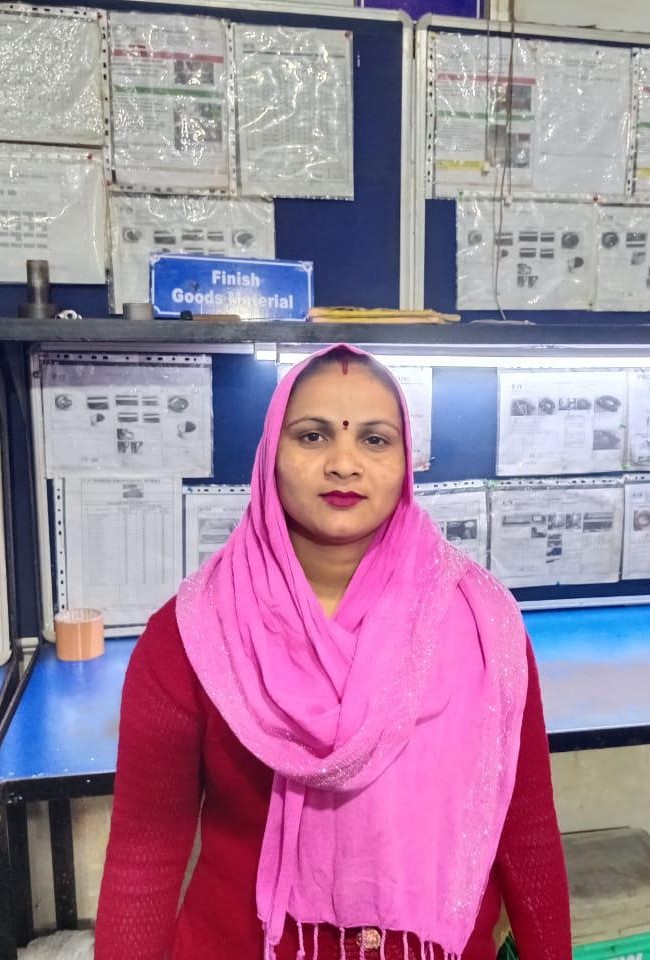
  • The clatter of the automotive line in Faridabad is its own language, CNC heads biting into metal, gauges ticking true. The women I met there speak that language fluently. They read microns the way most of us read moods: quickly, accurately, without fuss. And yet when we stepped off the shop floor to talk about UPI, a different hesitation appeared, as if the phone screen were somehow trickier than a 5-axis mill.

    Galti se paise kahin aur chale gaye toh?(What if the money accidentally goes somewhere else?) one operator asked, wiping coolant from her gloves. Another pointed to the canteen QR: “Scan to Pay dekha hai, par kabhi kiya nahin.(I’ve seen ‘Scan to Pay,’ but I’ve never actually used it.) It wasn’t a lack of ability these are women who program offsets and catch chatter marks with their ears. It was a lack of trust and familiarity with the flows behind a glowing button.

    So we redesigned the session for a factory’s rhythm—short, sharp, and shift-friendly.

    We met in the ten-minute gap between tool changes. No lectures. We started with two parallels they already knew: tolerance and process control.

    • PIN is your machine lock—kabhi share nahi (never share it).
    • OTP is a one-time inspection code—ek baar ka code, phir kaam khatam (valid once, then done).
    • Unknown links? Like an unverified toolpath: aap run nahi karte (you do not run it).

    Then we practiced with the smallest possible stakes. A ₹1 transfer from my demo account to theirs and back again. Balance check. A test recharge. We mapped each step to a process sheet: Open → Verify → Enter PIN in private → Confirm → Observe Result → Log. The operator who first rolled her eyes at “apps” ended up teaching the next person, tapping the confirm screen like a cycle-start button. When the first ping landed, the smile looked exactly like it does when a part hits tolerance on the first try.

    Safety was our non-negotiable. We showed how official customer-care numbers live inside the app, not on Google; how refunds work when a payment is “pending”; how to lock UPI instantly if a phone is misplaced. We ran a three-line chant till it felt like muscle memory:

    • PIN/OTP kabhi share nahi.(Never share your PIN or OTP.)
    • Unknown links kabhi click nahi.(Never click unknown links.)
    • Numbers sirf official app se.(Use phone numbers only from the official app.)

    Heads nodded; a supervisor listening from the door nodded too.

    By the end of two short huddles (one per shift), nearly everyone had completed at least one real task on her own phone. A few linked payroll accounts they’d never opened in their app before; one scanned the canteen QR with visible delight, no cash line today. The pride wasn’t loud, but it was solid, like a well-clamped workpiece.

    I left with the whir of spindles in my ears and a reminder in my notes: complex work isn’t the barrier; unfamiliar work is. These women already live in a world of precision and consequence. Give them a clear map, a small practice run, and respect for their time—and they move through digital money like they move through metal: steady, exact, capable.

    Next we’ll set up a fortnightly micro-clinic in the break room: ten-minute slots, quick PIN resets, scam-drill refreshers, and an HR-backed helpline number on every noticeboard. The canteen vendor, meanwhile, has promised to keep his QR laminated and visible. Tiny fixes. Big throughput.

    On the factory floor, a good day is when the first part is a good part. In Faridabad, our first rupee was a good part and that’s how habits begin.

  • A village afternoon that felt like a turning point

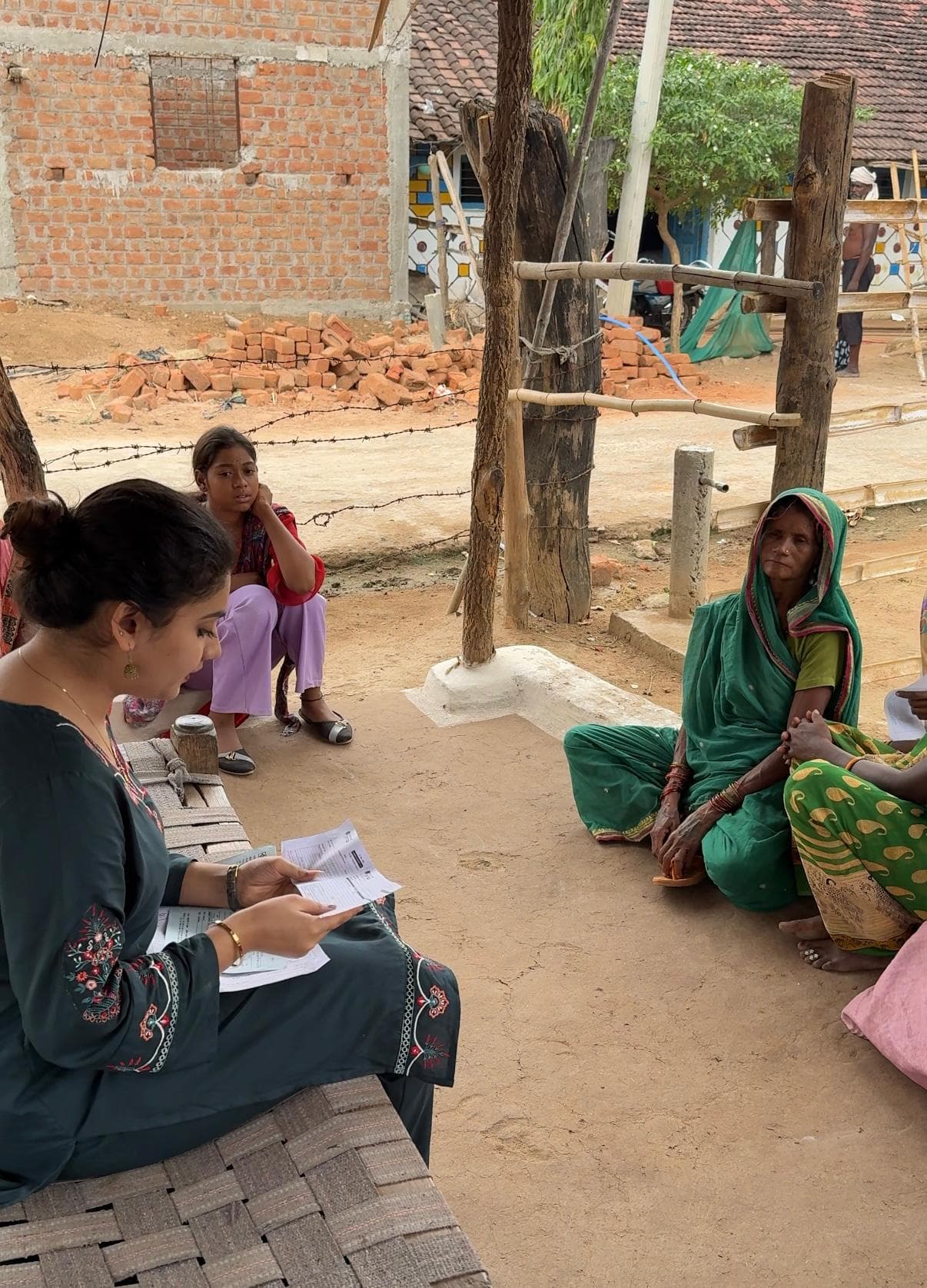
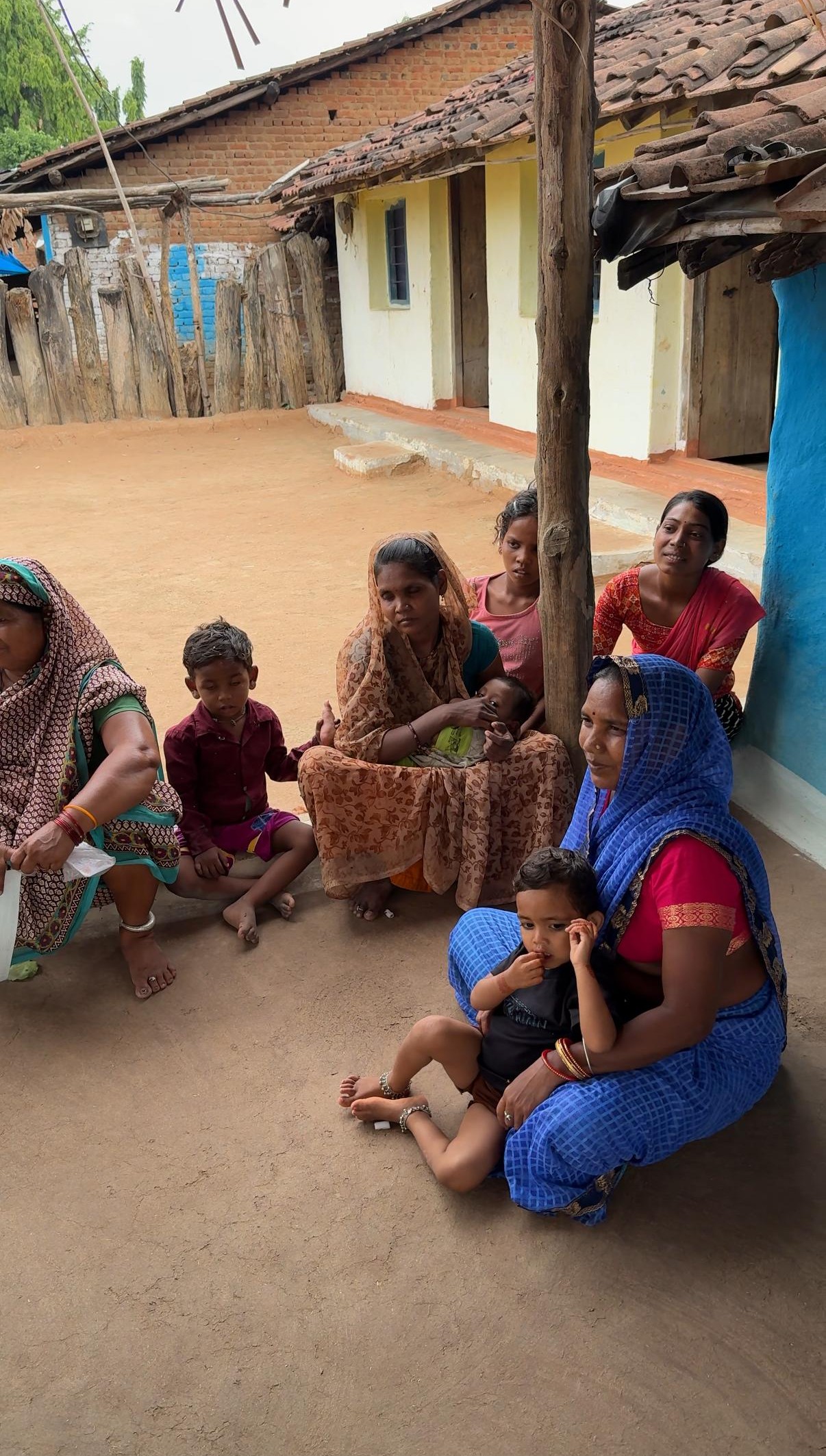
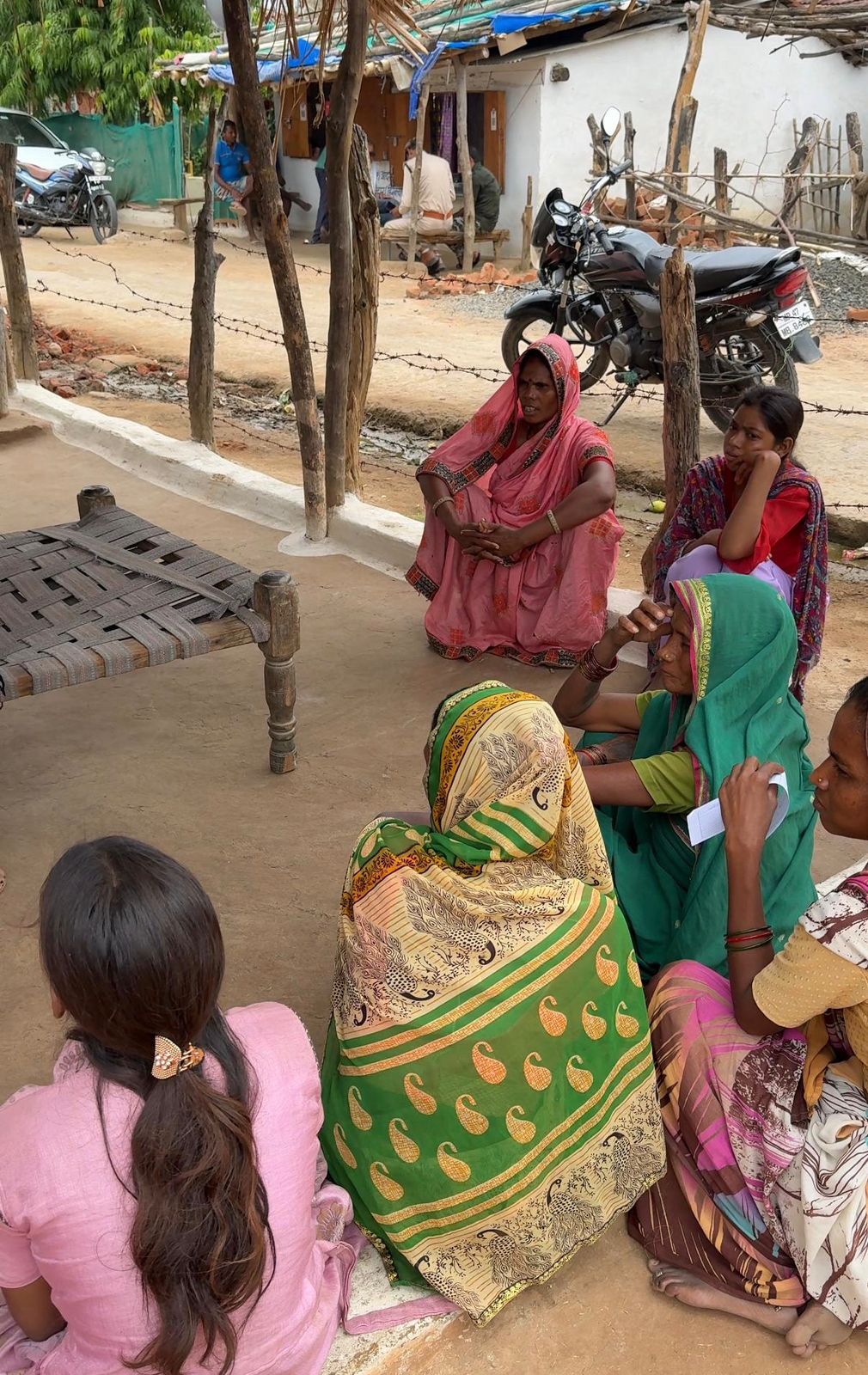
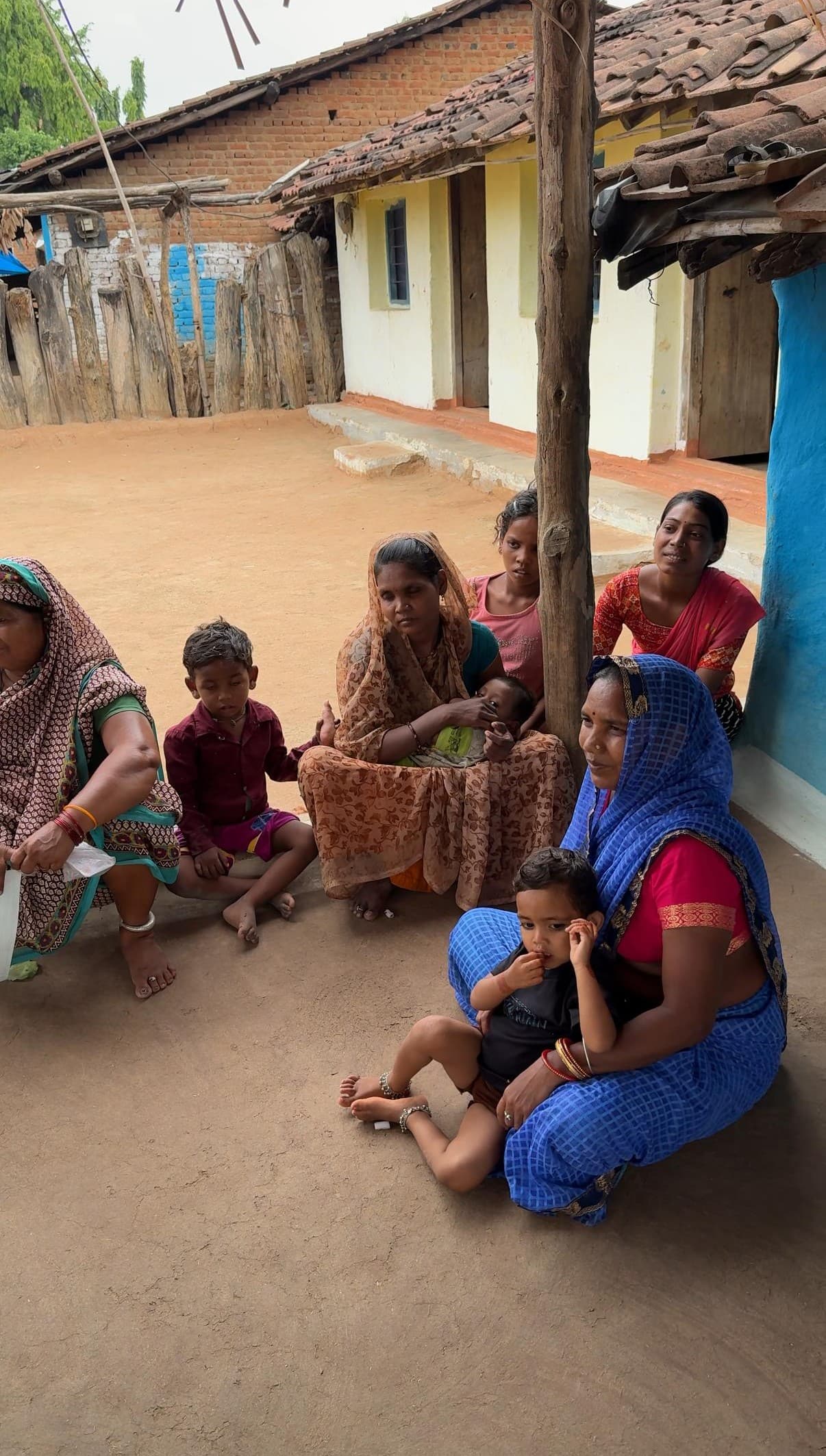
    Under a shade of bamboo and neem, with half-built brick homes behind us and the day’s work humming in the lanes, we gathered with a small circle of women in Hiran Chapada, a tribal hamlet in Madhya Pradesh. Some sat on the woven cots, others on the packed earth, green odhnis framing curious faces. A little nervous laughter gave way to focused silence as we opened our first page: “Bank khaata kyun? Aur UPI kaise?” (Why a bank account and UPI how?)

    This was not just a workshop. It was the next step in a campaign we’ve been building since early June meeting women where they are, in their language, at their pace to replace fear of online banking with confidence.

    Why this mattered here?

    Many women in Hiran Chapada handle daily purchases, run small home enterprises, or manage SHG (self-help group) savings but digital banking felt distant. We heard familiar concerns:

    • “Phone pe galat dab gaya toh?”
    • “Paise kahin atak na jayein?”
    • “OTP aur PIN ka farq?”

    These aren’t just questions; they’re barriers to income security.

    Our goal is simple: financially literate women who can independently use digital banking tools from balance checks to UPI payments and bank transfers.

    What we carried in and why it worked?

    • Smartphone & Laptop: Live demos, screen mirroring, and one-on-one practice
    • Visual Aids: Posters and handouts in simple Hindi with icons (PIN ≠ OTP, do’s/don’ts)
    • Voice-based Guides: For participants with low literacy
    • UPI Apps (PhonePe/Paytm), RTGS overview, Mobile Banking: Real-time practice

    The Demo Day

    The first demo was ordinary and, therefore, monumental. Balance check. Mini statement. A one-rupee transfer from my account to a volunteer’s and back again. When Shanti bai’s transfer made that little ping, she covered her mouth and then laughed out loud, a sound that moved around the circle like a breeze. It wasn’t the rupee; it was the proof. Fear loosened its grip.

    Fear left quietly, the smile stayed loudly

    The heart of the session was not information; it was rhythm. Try, see, repeat. We mirrored the phone screen for the group, then put the same steps back into their hands. Scan. Confirm. Enter PIN in private. Wait for the chime. We kept the steps short and the stakes tiny. No one had to be brave; they just had to be curious for a few more seconds than their fear. “Aaj se main karungi,” said a younger participant as she finished her first mobile recharge. “Bhaiya ko bolne ki zaroorat nahi.” It wasn’t rebellion. It was relief.

    We talked about safety, not like a warning but like a routine. PIN and OTP are never shared. Unknown links are never tapped. Customer care numbers come only from official apps, not from a forward or a search result. If money is stuck, we don’t panic; we follow the in-app help, raise a ticket, and wait for the bank’s process to finish. To make it stick, we chanted the rules together and laughed at our own seriousness.

    What changed in two hours was small on paper and huge in spirit. Before we began, fewer than half could clearly explain the difference between PIN and OTP; by the end, almost everyone could repeat it back and show it on the screen. Every participant completed at least one real task—checking a balance, sending a test rupee, or doing a small recharge. No one left with a confused face. Many left with a new habit: asking the right questions before pressing the next button.

    Running this kind of learning day is simple and surprisingly affordable. A few posters, mobile data, a bit of travel, and we are ready about a thousand rupees for an entire village visit, funded from our own pocket for now. The cost is light, the outcome is heavy!

    People often think financial inclusion is a government scheme or a form you submit. We have learned it’s closer to learning to ride a bicycle. Someone holds the seat, you pedal on a quiet lane, and one morning you look back and realise you are moving on your own. Hiran Chapada was that quiet lane for us- a small afternoon that will ripple for months.

    If you were there, you would have seen it: the moment a one-rupee chime turned into a sentence-Main kar sakti hoon.

    And once that sentence lands, the rest is just practice.